
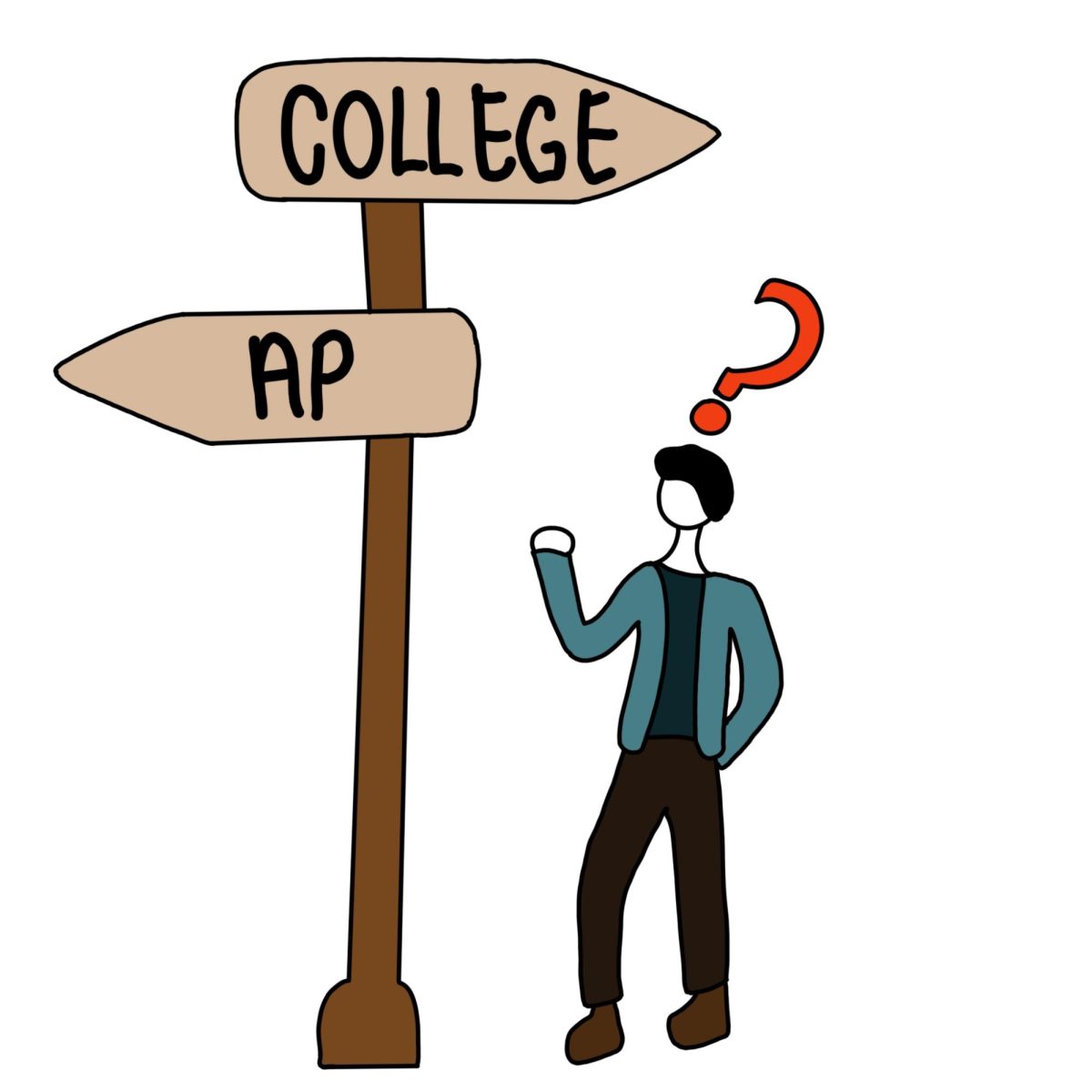
Advanced Placement classes may appear unnecessary or too rigorous for some, but rather they serve as an opportunity to acquire exposure to the rhythm of college classes. True learning and growth are born out of challenge, not comfort, and AP classes facilitate just that.
A major benefit of AP courses is that they display students’ willingness to challenge themselves, which is reflected heavily on college applications. Colleges do not solely assess one’s academics, but rather they look at the overall effort and choices depending on each applicant’s circumstances. According to the College Board, “85 percent of selective colleges and universities report that a student’s AP experience favorably impacts admission decisions” (apcentral.collegeboard.org).
When deciding whether taking an AP course is the right decision, checking the websites of top colleges to see whether the AP class provides transferable credit is a strong indicator of the value the course offers. According to Appily, a website to assist with college planning, “According to the College Board, in 2024, more than 60 percent of all AP exams taken resulted in a 3 or higher. Top-performing students often enter college with a semester’s worth of credits already earned” (appily.com).
Considering AP classes consist of college-level curricula, they help prepare you for college classes in the future and for lengthy exams. According to the Princeton Review, “Studies show that students who take AP courses tend to perform better in college, as they are already accustomed to the demands of higher-level coursework” (princetonreview.sg). From time management to study skills to independent work, AP classes expose students to academia they will face post high school.
While college classes can offer similar benefits, AP classes are offered face-to-face, allowing students to be better prepared for the exam and retain the information. Since almost all community college classes are online and independent, many students strive to just complete the course and pass it, often using Artificial Intelligence, and do not retain much of the information taught. Junior Kai Selleck, a driven AP Scholar, said, “The skills I’ve gained have been my comprehension skills in terms of academics; moreover, AP classes have also forced me to be more organized and time efficient.”
AP courses also serve as a cost-effective college credit, where an AP Scholar pays a fee of 99 dollars per exam. Many schools can waive the fees for students who qualify, making them accessible to everyone. Studying meticulously, paying the exam fee, and getting a passing score can save a student thousands of dollars in college. When students score a three or higher on the AP exam, the credit is eligible to be transferred to many universities. When you compare the cost of an AP Exam to the thousands of dollars a college course might require in tuition, the savings are clear. In fact, students who take multiple AP Exams and earn passing scores could even graduate early, reducing not only tuition costs but also expenses related to housing, meal plans, and other college fees” (princetonreview.sg).
While some may argue that college classes offer guaranteed college credit, they are often independent classes with little to no guidance. For underclassmen, college classes are not available; rather, AP classes are to prepare them for the college classes they would take in the coming years.
The decision of whether
to take college classes versus Advanced Placement classes in high school can vary from student to student, depending on their desired major and plans for further education. Regardless, enrolling in at least a few AP classes sets a student up for success. Counselor Kim George said, “We encourage students to recognize the value of both AP and college courses. College admissions looks for well-rounded students who challenge themselves and explore different areas of interest. Taking a combination of AP and college classes allows students to demonstrate that they are ready for the college environment.”
While a student can benefit from both AP and college courses, AP classes provide a student with a challenging yet valuable educational experience. Not only do these courses prepare one for further education but they allow for students to interact in-person and receive structured and personalized guidance.