
With the 2026 midterm elections rapidly approaching, President Donald Trump has been increasing his demands for the Senate to pass the SAVE America Act, going as far as posting on Truth Social, “I, as President, will not sign other bills until this [The SAVE America Act] is passed” (truthsocial.com).
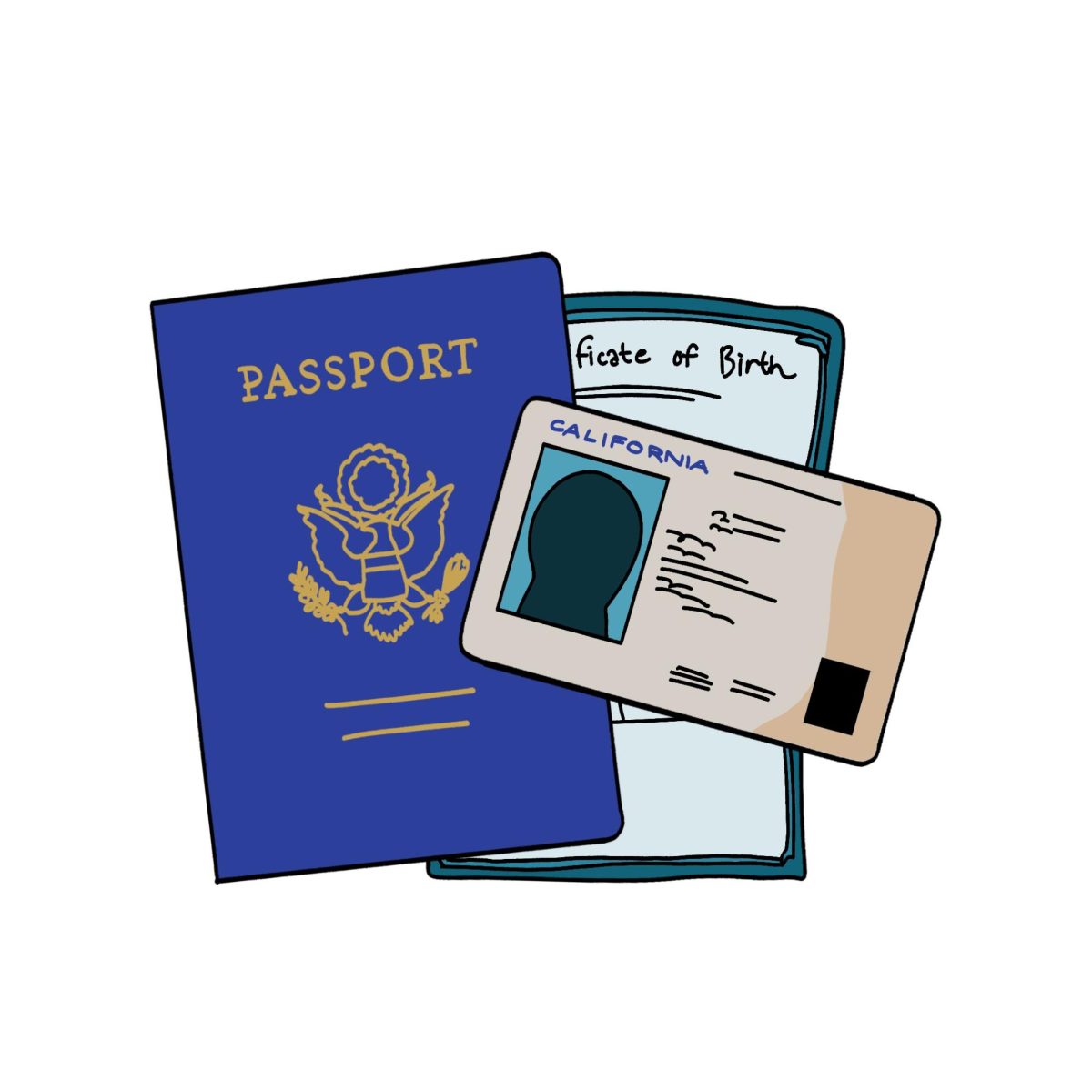
The bill, which aims to overhaul voting requirements and prevent election fraud, would, according to National Public Radio, “…require eligible voters to provide proof of citizenship — like a valid U.S. passport, or a birth certificate plus valid photo identification — when registering to vote… [and] provide photo ID when casting their ballot” (npr.org). The SAVE America Act, however, is not legislation meant to curb voter fraud; it is designed to restrict the voting rights of millions of Americans.
The SAVE America Act, a supposed stop to election fraud, seems to be stopping a nonexistent problem. The Heritage Foundation, a right-wing think tank, found that in the last fifty years, there have been only 100 cases of non-citizens registering, voting, or attempting to vote out of billions of total ballots cast (electionfraud.heritage.org). While voter fraud is statistically insignificant, Republican politicians have manufactured the topic into a crisis.
The SAVE America Act will exclude eligible voters, primarily women and lower-income citizens, who have historically played key roles in the democratic voter base. According to a website about voting, more than 50 percent of American citizens do not possess a passport, and around 69 million women who have changed their name after marriage do not have a birth certificate matching their legal name (vote.org).
If the SAVE America Act passes just months or weeks before the 2026 midterms, millions of Americans would be left scrambling for documents to make them eligible to vote. These voters heavily favor the Democratic Party, as according to Pew Research, about 58 percent of voters with lower family incomes associate with the Democratic Party, compared with 36 percent who affiliate with the Republican Party, and more than 50 percent of women voted for Harris over Trump in 2024 (pewresearch.org). While clearly not uniform in their voting, the effects of limiting their participation will have strong partisan consequences, especially when elections are at times decided by just a few thousand votes.
In remarks delivered at the House Republican policy retreat on March 9, President Trump, while urging Republicans to pass the SAVE America Act, stated, “It will guarantee the midterms” (cbsnews.com). With Republican popularity plummeting and the midterms just months away, the SAVE America Act is a last-ditch effort to preserve Republican control of the House and Senate.
The SAVE America Act is more than just election subversion — it is bordering on a constitutional violation. The Twenty-fourth Amendment of the United States Constitution states, “The right of citizens of the United States to vote in any primary or other election… shall not be denied… by reason of failure to pay any poll tax or other tax” (constitution.congress.gov). Should the SAVE America Act be passed, first-time passport holders would have to pay 225 dollars to receive a passport within 2-3 weeks (state.gov). This is a price simply unaffordable for the millions of Americans already living paycheck to paycheck. While it is a constitutional gray zone whether or not document purchases could be considered a poll tax, when used to effectively disenfranchise millions of voters, it is clearly contrary to the intent of the amendment.
The SAVE America Act is being pushed as a tool against voter fraud, while it is actually a proven means of disenfranchisement. Look no further than Kansas, which implemented a nearly identical piece of legislation to the SAVE America Act in 2013. According to the Bipartisan Policy Center, a think tank founded by former Republican and Democratic Senate leaders, noncitizen registration in Kansas before the legislation was passed accounted for about 0.002 percent of registered voters. After the adoption of the Kansas Secure and Fair Elections Act, 31,000 eligible citizens, or 12 percent of all applicants, were prevented from registering to vote (bipartisanpolicy.org).
The act was eventually deemed unconstitutional by a federal court for not allowing all citizens equal protection under the law. Kansas has proved that, rather than combat election fraud, this legislation disenfranchises millions of Americans. A nation founded on democratic principles, with a specific amendment ensuring Americans can vote regardless of income, is now attempting to implement a law that conflicts with its own constitution.