
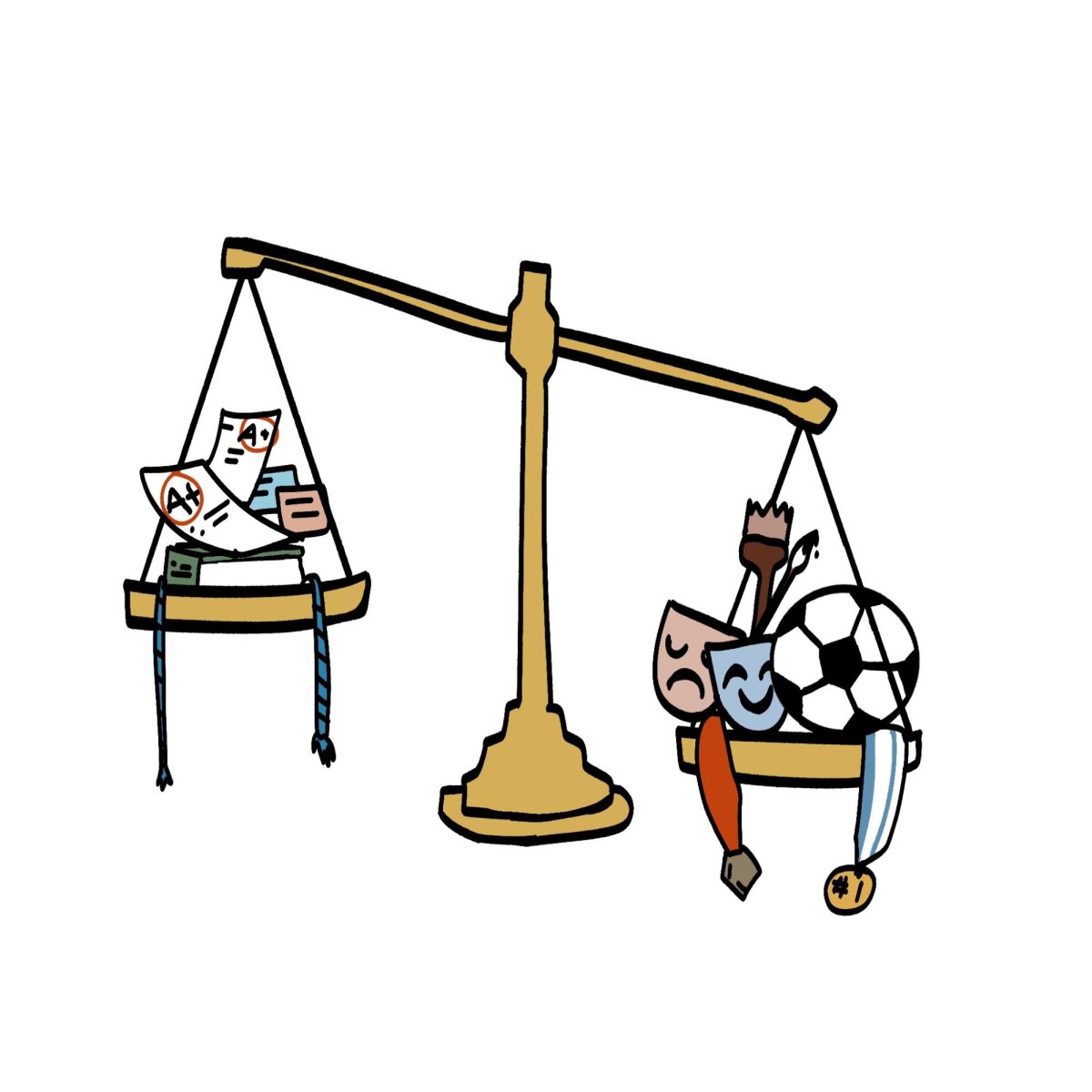
Students are constantly being measured. Whether it be tests, homework, or group projects, every little thing gets scored and scrutinized for how well they do. Given that one must be more knowledgeable in order to have a higher grade, it would only be natural to assume that a student’s grades and grade point average (GPA) are good indicators of how smart they are. That assumption would actually be incorrect, however. Grades and GPA are poor metrics for measuring intelligence.
Firstly, the ability of a student’s grades or GPA to be a good measurement of intelligence predicates entirely on the false assumption that for any given task, the student’s failures or successes are entirely their own, and entirely intellectual. This way of thinking does not account for any external forces that may hinder or help their completion of schoolwork. Think about a student who is socio-economically disadvantaged. Are they foolish for having no electricity for light or internet? Are they “dumb” because they had to pick up an extra shift so they could afford dinner rather than studying? Obviously not.
Their situation clearly hinders their ability to do well in school. They could be the most intelligent person in the class, but by looking at their grades, you wouldn’t be able to tell, since they couldn’t do their work. In a similar vein, everyone forgets or is unable to complete their work now and then, and they get a bad grade, which may or may not reflect how much they know, or how well they would have done had they really tried. There are simply too many variables at play that can affect grades and GPA. They do not isolate intelligence well enough to measure it.
According to the American Psychological Association, intelligence is defined as, “…the ability to derive information, learn from experience, adapt to the environment, understand, and correctly utilize thought and reason” (apa.org). Obviously, this is an extremely broad definition. Even assuming that grades and GPA do isolate intelligence well enough, it is still insane to assume that intelligence can be measured by a couple of numbers. Grades, which are simply measurements of correctness on a specific task, at best, capture how much knowledge about a subject a student has captured and how well they can apply it. There are just too many forms of intelligence and modes of its expression for them to be judged only based on knowledge and its application in a few specific areas. The world’s greatest chess prodigy might not be able to write an essay to save their life, but only one of those things is factored into grades. As the adage goes, you wouldn’t judge a fish by its ability to climb a tree.
Not even taking into account what grades or GPA actually measure, the fact also remains that they are just very inconsistent measurements across classes and institutions. If you look at two students taking the same course, but with different teachers, you may see vastly different requirements for course completion. One teacher may require two hours of reading every day, while another may only require one hour of reading every three days. Students may earn an A in each class, but are these grades equal? Their grades would only reflect how well they met the requirements for the specific teacher they had, not their knowledge.
While it may be true that higher grades correlate with higher intelligence, it’s important to remember that correlation does not equal causation (sciencedirect.com). Grades and GPA should only be used as a very, very general estimator for intelligence. Does an individual demonstrate intelligence in a greater variety of areas, or are they just diligent in doing their schoolwork? Grades and GPA should not be considered the end-all, be-all intelligence metrics. Instead, they should be taken into consideration within a more holistic view of a person.