
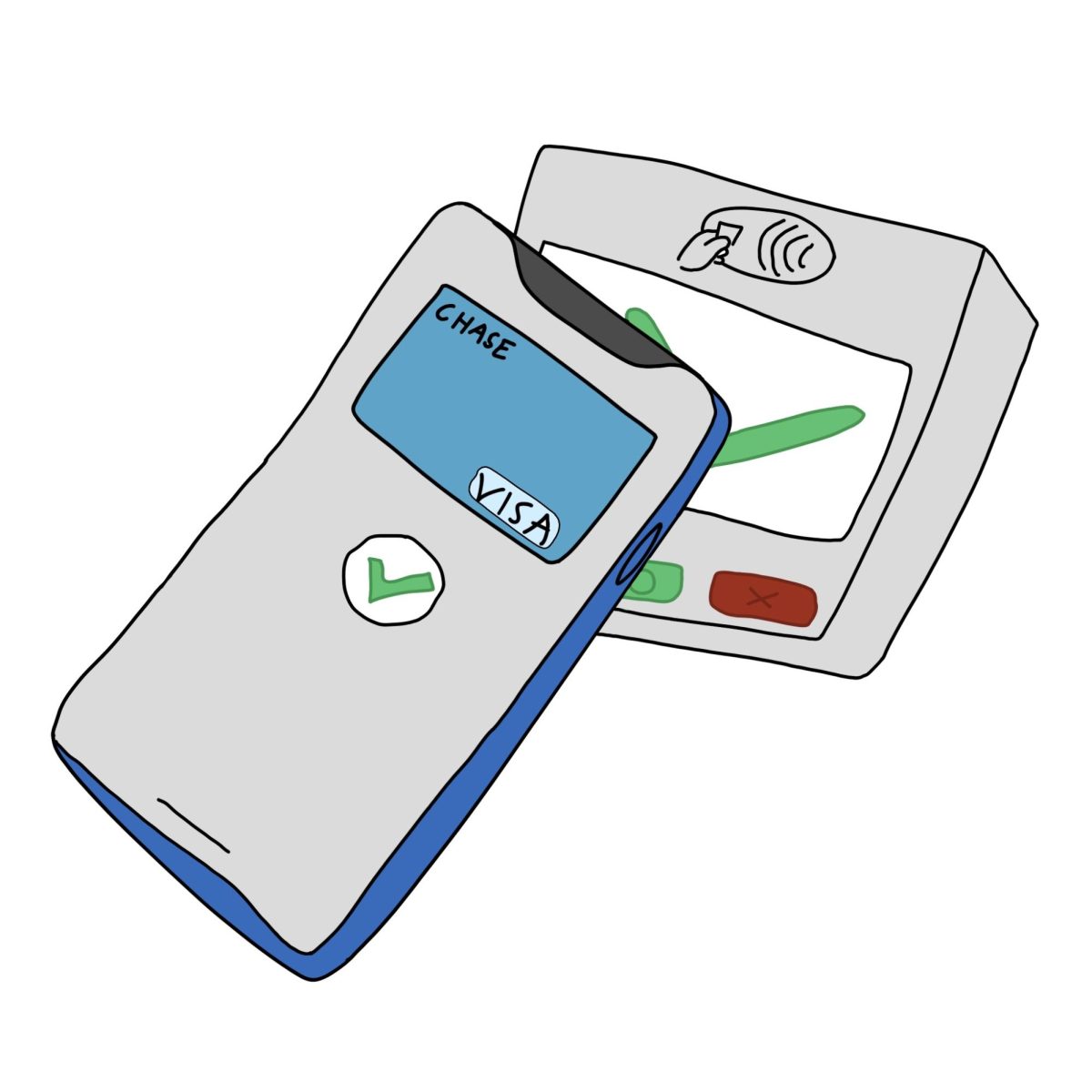
The rise of contactless payment methods has made it much easier for consumers today to make purchases without the inconvenience of carrying around physical cash. According to recent studies, more than 50 percent of in-store transactions are now contactless (ingenico.com). Electronic payments are especially popular among younger generations, and this has led to changes in how they value and spend money. Tap to pay transactions take seconds to complete, stopping people from thinking about how much they are actually spending, since they don’t have to physically take out their cash and hand it to a cashier. Even though they are convenient, these digital payment methods have resulted in many young people losing their understanding of the value of money by making spending a thoughtless action.
These digital payment methods make it easier to impulsively spend, and most people don’t even realize it. When you pay with traditional cash, there is a physical delay in the transaction, as people must count out bills and receive their change. This forces the buyer to recognize how much they are paying, leading to less thoughtless spending.
Another reason why contactless payments lead to reckless spending is that it significantly reduces, or even removes the “pain of paying,” an economic concept that refers to the discomfort an individual feels when spending money. According to the National Library of Medicine, “Digital payment methods, such as credit cards or mobile wallets, abstract the process of spending, which lessens the emotional significance of the transaction and lessens the pain” (pmc.ncbi.nlm.nih.gov). The lack of emotional feedback often makes it easier for consumers to underestimate how much they are spending. Simply tapping a card or phone to make a twenty-dollar purchase feels less significant than handing over the same amount in bills. The convenience and speed of digital payments make it psychologically easier for consumers to spend money without thinking about the financial impact it will have, weakening their value of money.
In addition to encouraging impulsive spending, contactless payment makes money feel less “real” and more abstract. Traditional currency allows people to actually see the money leave their hands, making the purchase and the loss of money feel more personal. According to a website about psychology, “Research shows that handling physical cash creates a sense of psychological ownership and awareness that digital payments lack” (sciencedaily.com). Compare this to digital transactions, they are quick and effortless, and the lack of a visible exchange makes it harder for people to connect the act of buying something to the loss of money. Over time, these “invisible” transactions accumulate, making money seem like a distant concept and spending seem less serious. “Digital payment methods… lack the tactile element of cash, creating a psychological detachment from expenditures and reducing the perceived visibility of spending” (pmc.ncbi.nlm.nih.gov). Without the physical aspect, the importance of money is easy to overlook.
Another way digital payments affect the way people value money is by hiding the true cost of purchases. Services like Buy Now, Pay Later (BNPL) let people split their purchases into smaller installments, which can make the cost of the product seem less significant. A 200 dollar item can be broken into four 50 dollar payments, so consumers may only focus on the smaller amount and ignore the total cost. Research shows that, “Customers who adopt BNPL spend significantly more than those who use traditional payment services, with BNPL usage associated with increased online order size” (sciencedirect.com). Spreading these payments out motivates people to spend more than if they had to pay all at once. This payment method can also trick people psychologically into feeling like the purchase is less expensive. On top of that, people may be influenced to buy things they would not normally purchase because the financial impact seems less severe. All these factors lead to money being perceived as less meaningful and more disposable.
Contactless payment methods have changed how the world sees money. Even though they provide speed and convenience, they should not make money feel meaningless.