
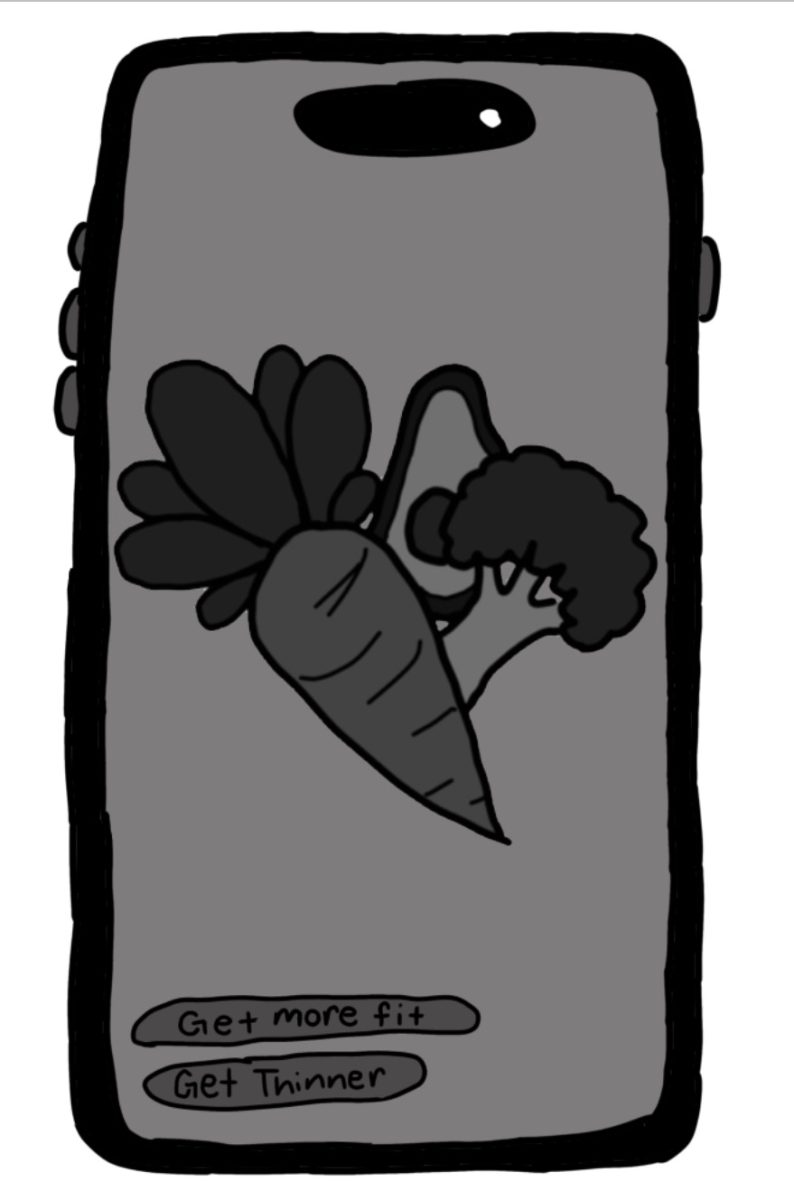
As New Year’s resolutions are often centered around health, they can push teenagers toward unnecessary dieting and weight loss. According to the National Library of Medicine, the significant influence of diet culture, primarily from social media, can encourage habits for teenagers that are not only unhealthy and unsustainable but also can harm both physical growth and mental well-being during a critical time of development (pmc.gov). From social media trends promoting extreme restriction to the pressure to “look perfect,” many teens choose to desire results that focus on appearance over true health, often overlooking a balanced diet, self-care, and long-term wellness.
Diet culture has become deeply embedded in the teenage experience, now more than ever, as the New Year approaches and resolutions push young people to eat healthier or lose weight. On various social media platforms such as TikTok, Instagram, and YouTube, one of the most viral trends is the “#WhatIEatInaDay” video. Although it may sound harmless for creators to document and share the meals they eat throughout the day, according to the National Alliance for Eating Disorders, “#WhatIEatInADay content can reinforce diet culture, glamorize restriction, and be deeply harmful — especially for people vulnerable to eating disorders…. Many may ask themselves: Am I eating more or less than this influencer? Is my body different because my food looks different? Should I change what I eat in a day to match theirs?” (allianceforeatingdisorders.com). While some of these videos may be well-intentioned, many are influenced by unrealistic social media standards, peer pressure, and messaging that equates self-worth with appearance.
In addition to negative social media trends, many teens misunderstand what it truly means to be “healthy.” Diet culture often relates health to extreme weight loss or restrictive eating, rather than focusing on a balanced diet and overall well-being. According to the National Library of Medicine, “A recent study highlighted how the eating behaviours portrayed on TikTok are focused on weight loss, with over 44 percent of the videos analysed promoting weight loss” (pmc.gov). This misunderstanding can lead to teens adopting extreme, unnecessary, and unhealthy habits such as skipping meals, cutting out entire food groups, or even obsessively counting calories, even when their bodies are already at a perfectly healthy weight.
For many teenagers, dieting does not lead to better health, but instead creates a cycle that is difficult to break. Initially, restrictive eating can make one feel more confident, especially when it is praised online; however, it often results in constant hunger, low energy, and eventual weight gain, some of which can significantly interfere with a teen’s performance in school and sports. According to an article about the dangers of dieting in adolescence, “The unique dietary needs of adolescents, to support puberty, growth, and development (physiological and neurocognitive), make the potential for negative physical health effects of dieting particularly concerning…. Moreover, evidence suggests that dieting among preadolescents and adolescents often results in paradoxical weight gain over time, potentially leading to physical consequences of excess weight” (cps.com).
Rather than focusing on weight loss or restrictions, health for teenagers should be focused on balance, nourishment, and overall well-being. At such a crucial stage of life where the body is still developing and changing, being healthy means eating enough fuel for daily activities, school, sports, and mental focus, not striving for a smaller body. According to an article about what “healthy” really means for teenagers, “‘Healthy’ behaviors should be sustainable. They are more than the absence of disease. They should support the function of your body and mind, and provide you with the ability to adapt to life’s demands” (psychologytoday.com). When health is measured by how one feels rather than how one looks, teens are more likely to build realistic, sustainable habits that are beneficial in the long term.
Instead of turning to diets that are restrictive, or setting weight-focused goals, teenagers should support their health through regular eating habits, staying hydrated, getting enough sleep, and moving their body in enjoyable ways that both fuel physical growth and mental focus without creating guilt around food (cdc.gov).