
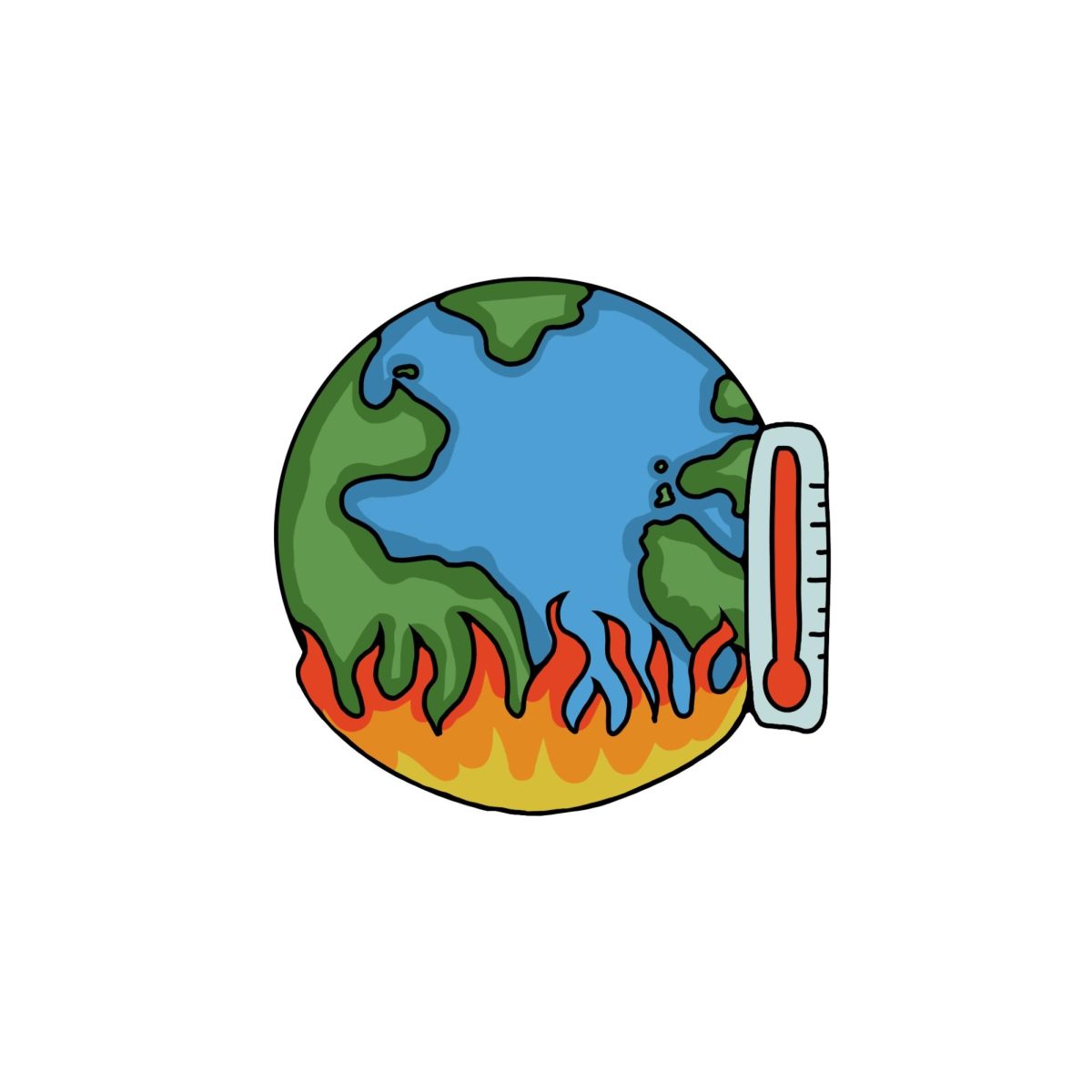
Climate change. What is it? Why is it happening? What can we do? According to NASA, “Climate change is a long-term change in the average weather patterns that have come to define Earth’s local, regional and global climates” (science.nasa.org). Now it may seem like it is an unhelpable cause; however, there are many things you can do to make a difference.
The world’s climate is ever changing. From the birth of Earth to today’s planet, the Earth has gone through more than eight cycles of ice ages and warmer periods, according to NASA. Most of these drastic changes are due to a change in how the Earth orbits the sun. These changes were all safe for Earth’s environment. But the way Earth is changing now poses a threat to mankind (science.nasa.org).
According to the National Oceanic and Atmospheric Administration, the effects of climate change put human societies in danger. As the world gets warmer, drought is inevitable, which can limit food sources and pose a risk for peoples’ health. Additionally, flooding can damage or ruin cities, homes, and crops. “Human health issues that result from drought, flooding, and other weather conditions increase the death rate, change food availability, and limit how much a worker can get done, and ultimately the productivity of our economy” (noaa.gov). These can wipe out human civilizations if we aren’t able to adapt to these conditions.
Although that may seem frightening, all hope is not lost. According to MIT News, “A new MIT-led study confirms that the Antarctic ozone layer is healing, as a direct result of global efforts to reduce ozone-depleting substances.” If you are unsure about what the ozone layer is, it is the protective barrier in our atmosphere keeping the Earth safe from excess Ultraviolet rays from the Sun. Without a healthy ozone layer, these dangerous ultraviolet rays reach Earth and, after prolonged exposure, they can worsen many aspects of human life. These aspects include damaging food sources (both animal based and plant based), harming human skin and health, damaging the planet and harming humans quality of life. Climate change has weakened this extemely important barrier and even caused a hole in the ozone layer that is now slowly healing (news.mit.edu).
While this news is reassuring, don’t relax just yet. There are things you can do at home to help save your planet. According to multiple sources about energy conservation, some of the costlier options include using solar panels on your house, insulating your home to prevent air leaks, switching to LED light bulbs, and using an induction stove – an eco-friendly alternative to gas stoves. Easier, lower cost options include using a reusable water bottle instead of a plastic one, using only the energy you need by turning off unused lights, air drying your clothes instead of using a machine dryer, walking or biking whenever possible, reducing plastic use (such as using glass containers instead of Tupperware, using resealable bags instead of Zipoc bags, and reusing grocery bags), using cold water instead of hot, composting leftovers, and recycling plastics (ucdavis.edu; carilec.org; climeworks.com).
Some of your fellow peers are already doing their part, take Junior Adelaide Hays and Junior Ava Chiaramonte for example. “Whenever I see litter or trash on the floor, I will always pick it up and throw it in the trashcan. It is important to help our planet, because if nobody helped out [picking up trash] for example, then the oceans and land would be crowded with trash,” Hays said. Chiaramonte helps in a different way; she explained, “To help the environment, I only use glass containers, cups, and straws. I also have a reverse osmosis water system built in my sink so I don’t have to use plastic water bottles.” While a new water system might not be acheiveable for everyone, everyone can do the smaller actions. Picking up litter or using glass utensils can still have a meaningful impact on the world. With everyone doing their part, the world is at benefit.
While climate change can feel overwhelming, there is still hope for our planet if people take responsibility and make small but meaningful changes. Simple actions like picking up litter and reducing energy use may seem minor, but together they can have a powerful positive impact on the environment.