
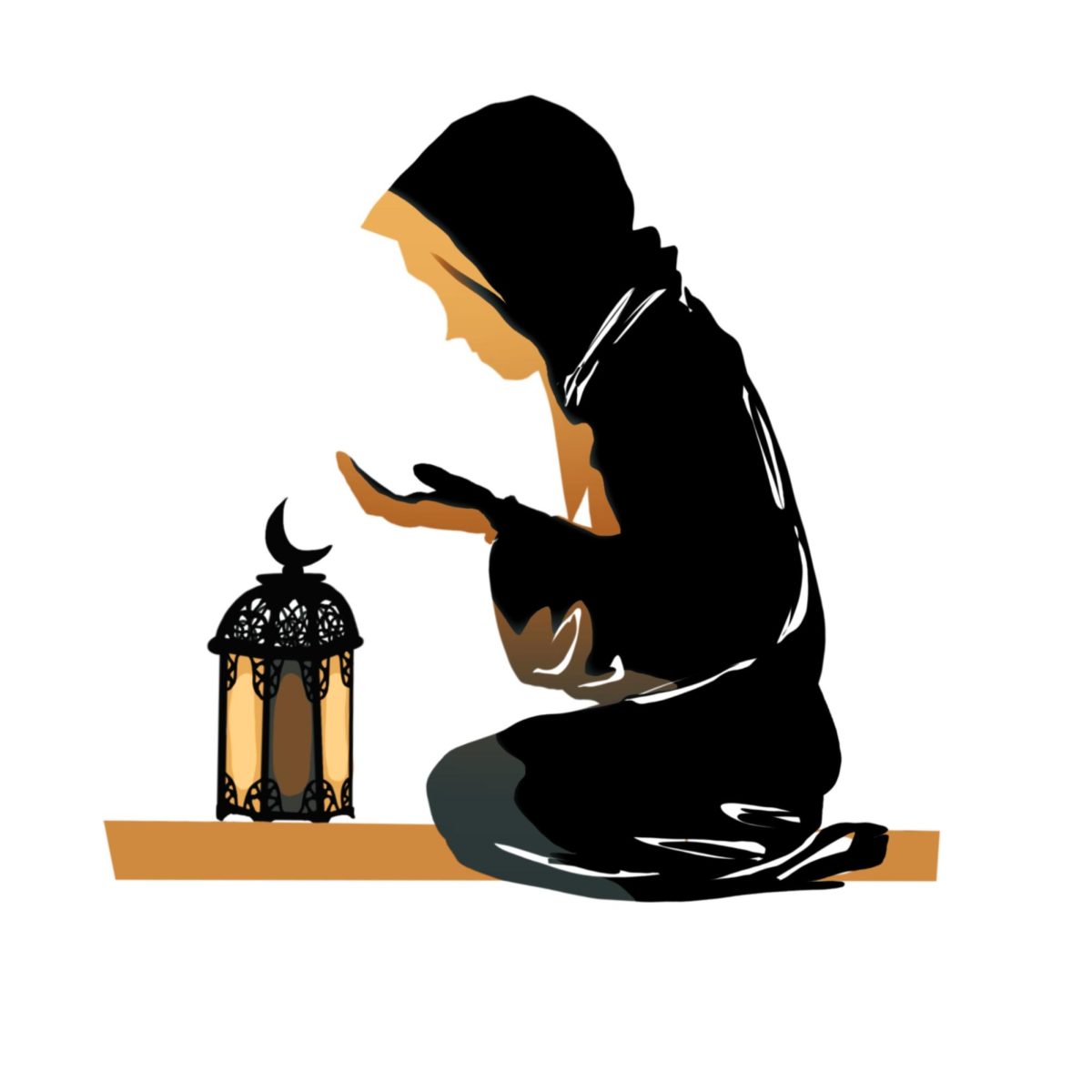
Ramadan is a month of fasting, prayer, and reflection. To UC High Muslim students, it is also a time to connect and reset. Traditions, special prayers, and dedicated time to read the Qur’an — the Islamic holy book — are all done during this sacred time. Ramadan is a very important time of year used to focus on your spiritual health and connection with Allah, the Arabic word for God.
While you may know the meaning of Ramadan, do you know its origins? According to an article about the history of Ramadan, “[It was] formalised around 622 A.D. At this time, the Prophet Muhammad and his followers were in Medina, where the hot climate influenced the term ‘Ramadan,’ meaning ‘burning heat.’” For context, the Prophet Muhammad is a prophet who received teachings from Allah which he then used to establish the Five Pillars of Islam which are key parts of the Qur’an (muslimaid.org).
One Pillar of Islam deals with ritual fasting, which is performed during Ramadan, where no food or drink is to be had during daylight hours. This can be hard, especially during the school year. Junior Layal Aziz said, “During Ramadan, maintaining enough strength and energy to do homework after school is most difficult for me as I find it already hard to attend [school] without being able to eat or drink.” With an already draining school day, it would be even harder to push through and complete additional coursework.
However, fasting restrictions are not limited to food and drink. According to an article about Ramadan, Muslims are prohibited from all negative acts such as gossiping, arguing, or lying. This is to strengthen their moral compass, reach spiritual improvement, and grow closer to Allah (ing.org).
Gaining closeness to Allah is one goal Sophomore Aya Barbakh has for Ramadan. “Spiritually, I want to feel closer to Allah and be more consistent in my prayers and intentions, even after Ramadan ends. I also hope to gain more patience and discipline,” Barbakh said. She also expressed her hope that the good habits made during Ramadan carry on through the rest of the year.
Along with building a deeper bond with Allah, bonds are built within the Muslim community as well. According to an informational article about Ramadan, “After performing the sunset prayers, the family eats dinner. Inviting guests to break the fast or going to someone else’s house for an iftar [meal of breaking the fast] is very common during Ramadan. Many families then go to the mosque for the night prayer and a special Ramadan prayer called Taraweeh.” All of this time together strengthens friendships and relationships as they are all communally celebrating their religion (ing.org).
Aziz enjoys this time together, as she expressed it being especially special to her. “My favorite part about Ramadan is the strengthened community bonds I make through attending communal Taraweeh prayer [a special prayer performed nightly during Ramadan after the night time prayer] and lectures given by Islamic scholars. By joining these events, I build a greater connection not only with my fellow Muslim friends, but with my religion as I am reminded of the valuable principles that we face in our day-to-day lives,” said Aziz. Ramadan can serve as a reminder of the teachings of Islam.
Ramadan is an opportunity to reset and step aside from all the noise. Barbakh agreed, saying, “It is a time where everything feels more calm and meaningful, especially the quiet mornings, the anticipation before iftar, the sound of the adhan [call to prayer], and the feeling that everyone around you is more present and being more intentional. Ramadan brings a sense of peace and unity and as an Arab Palestinian Muslim, Ramadan feels like a deep connection to my faith, my culture, and my family.”
Ramadan is a special time of year when Muslims around the world participate in fasting, prayer, connection, and giving their praise to Allah. Although it is hard to fast from dawn till dusk, it helps to quiet the chaos and focus on the things that matter.